
1.
Greeks and Orthodox Christianity in Iowa
2. Greeks in Des Moines
3. St. George Parish
Click
on a link to move through the text.
|
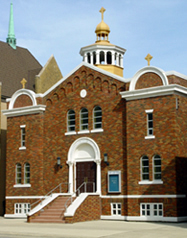
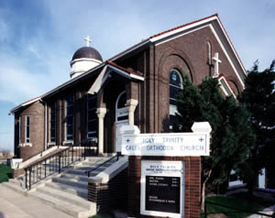
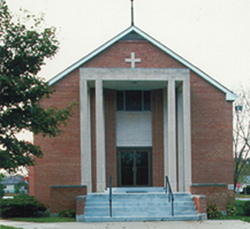
1. Greeks and Orthodox Christianity in Iowa There are approximately 6000 Greek-Americans living in Iowa today, up from a U.S. Census total of 18 Greeks in Iowa in 1900. Most are descendents of the early immigrant communities of Sioux City, Mason City, Des Moines, Cedar Rapids, Waterloo, Davenport, Council Bluffs, and Dubuque. Many of the earliest, almost exclusively male immigrants returned to Greece, but by the 1920s, most Greeks stayed and raised families, establishing a permanent Greek-American community in Iowa. They founded Greek Orthodox churches in Waterloo (St. Demetrios, 1914), Sioux City (Holy Trinity, 1917), Mason City (Holy Transfiguration, 1918), Des Moines (St. George, 1928), Cedar Rapids (St. John the Baptist, 1938), and Dubuque (St. Elias, 1956). The Eastern Orthodox community isn't limited to people of Greek ethnicity, however. Iowa also has three Antiochian Orthodox Churches. Two of the churches, St. George in Cedar Rapids and St. Thomas in Sioux City, serve primarily Lebanese/Syrian communities. In the summer of 2001, St. Raphael of Brooklyn Antiochian Orthodox Mission in Iowa City was founded by converts to the Eastern Orthodox Church. In the spring of 2002, a new mission church of the Orthodox Church in America (an offshoot of the Russian Orthodox Church) was founded in Pella, Iowa as the St. Nicholas Orthodox Christian Church. Pella is located approximately 50 miles southeast of Des Moines, and is known nationally for its Dutch heritage and annual Tulip Festival. St. Nicholas (Sinterklaas) is the patron saint of the Netherlands. The OCA is an autocephalous (self-headed) jurisdiction in the United States and Canada. St. Nicholas Church is under the jurisdiction of the OCA's Diocese of the Midwest. In 2012, St. John the Wonderworker Orthodox Church, a mission parish of the Russian Orthodox Church Outside of Russia (ROCOR) (not to be confused with the OCA) was established in Des Moines as a Western Rite Orthodox parish. A Western Rite parish, as opposed to a Byzantine (or Eastern) Rite parish, holds the fullness of the Orthodox faith with their Eastern Rite bretheran, but celebrate Western forms of liturgy. The Divine Liturgy regularly celebrated at St. John the Wonderworker is The Divine Liturgy according to Saint Germanus of Paris, and they also celebrate the Divine Liturgy of St. John Chrysostom. The parish currently holds services at St. Mark's Episcopal Church in Des Moines. In April of 2002, a group of Egyptian immigrants founded St. Mary Coptic Orthodox Church in Urbandale, a suburb of Des Moines. The Coptic Orthodox Church, under the Coptic Patriarchate of Alexandria, is part of a communion known as the Oriental Orthodox Churches, which also includes the Ethiopian Orthodox Tewahedo Church, the Eritrean Orthodox Church, the Malankara (India) Orthodox Church, the Syrian Orthodox Church of Antioch, and the Armenian Apostolic Church. The Coptic Church in particular has been described by scholars as a "living museum" of ancient Christian tradition and practice. |
|
|
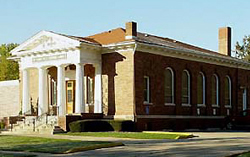
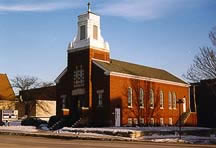
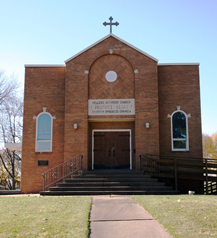
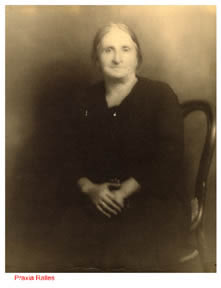
In 1924, two hundred Greek immigrants in central Iowa formed a Kinotis, or Greek society. Four years later, the Greek Orthodox parish was established, with church members from Boone, Perry, Ft. Dodge, Newton, Oskaloosa, and Ottumwa, as well as Des Moines and Valley Junction (now West Des Moines). The parishioners voted unanimously to name their church after their most common given name--"George," for St. George the Great Martyr. Visiting priests conducted services on an irregular schedule at the old YMCA building at Fourth Street and Keosauqua Way. Later, the parish held services at a hall owned by St. Mark's Episcopal Church, then at East 13th and Des Moines Streets. In 1929, the parish battled U.S. immigration authorities in order to bring Fr. Meletios Kestekides from Greece to be its first regular priest. In late 1930, St.
George Parish moved into its present Greek
Revival-style church building after agreeing to
purchase the property from Westminster
United Presbyterian Church for At a celebration on November 14, 1937, attended by 800 persons, the re-negotiated $16,000 mortgage was burned and Bishop Kallistos of Chicago consecrated the church building. Dignitaries in attendence at the celebration included Iowa Governor Nelson G. Kraschel. |
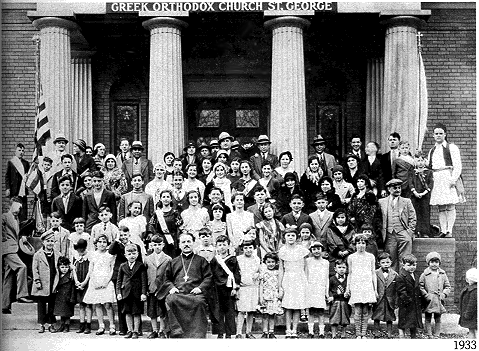 Group
shot of the congregation,
1933 Group
shot of the congregation,
1933From the Parish's 50th Anniversary book. Photographer unknown.
|
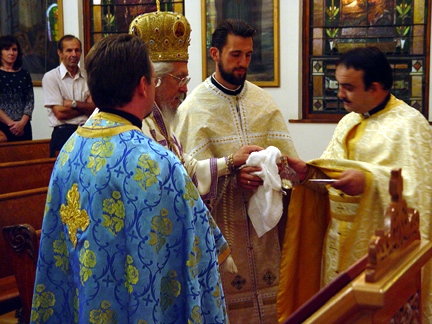
Today, we are a parish of 184 member families. The parish receives spiritual and administrative leadership from Metropolitan Iakovos of the Metropolitanate of Chicago. |
|
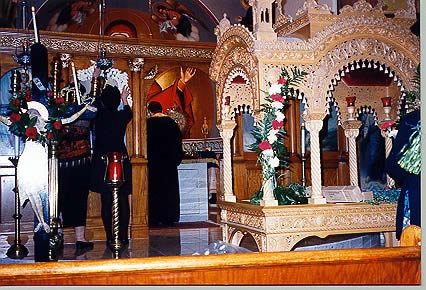
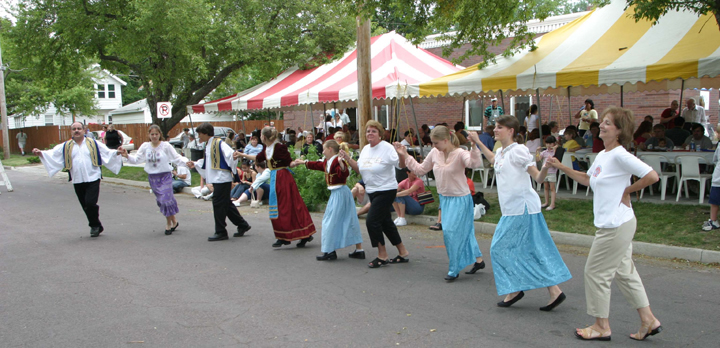
Each year on the
first weekend in June, St. George Church hosts a Greek
Food Fair serving delicious
Greek food and introducing the
Church and Greek culture to more than three
thousand guests.
